Introduction: The Birth of a Digital Revolution
The world of sports has always been about competition, passion, and performance. Yet, over the past two decades, a new form of sport has emerged, one that doesn’t rely on physical prowess alone but on mental agility, reaction speed, and strategic thinking — Esports, or electronic sports. What started as small-scale video game competitions among friends has transformed into a billion-dollar global industry. Today, esports arenas are filled with roaring fans, professional teams have sponsorships from major corporations, and players have become celebrities with millions of followers.
Esports has redefined what it means to be an athlete and has blurred the boundaries between entertainment, technology, and competition. This transformation has not only changed how we view gaming but has also reshaped global culture, education, and even economics.
The Origins of Esports: The Early Days of Competitive Gaming
Before the glitz and glamour of modern esports, competitive gaming was a small, underground community. The roots of esports can be traced back to the early 1970s, when computer science students at Stanford University organized the first recorded video game competition. The game was “Spacewar!”, and the prize was a year’s subscription to Rolling Stone magazine. This humble event marked the beginning of something much larger.
As technology advanced, the 1980s saw the rise of arcade gaming. Titles like Pac-Man, Donkey Kong, and Space Invaders dominated local arcades, and players began competing for the highest scores. Magazines and television programs started featuring top players, and for the first time, gamers gained public recognition.
By the 1990s, with the introduction of home consoles and PCs, multiplayer games became increasingly popular. Titles like Street Fighter II and Quake introduced direct player-versus-player competition. The Quake tournament known as “Red Annihilation” in 1997, where the winner received a Ferrari from game designer John Carmack, is often cited as the first major modern esports event.
The 2000s: The Rise of Online Play and Professional Leagues
The new millennium brought high-speed internet and global connectivity, revolutionizing the gaming landscape. Players no longer needed to be in the same room — or even the same country — to compete. Games like Counter-Strike, StarCraft, and Warcraft III became international phenomena. South Korea, in particular, played a pivotal role in shaping esports as we know it today.
During the early 2000s, South Korea built a robust esports ecosystem. Television networks began broadcasting matches, gaming cafes (known as PC bangs) became cultural hubs, and professional players achieved celebrity status. The Korean StarCraft scene attracted millions of viewers, setting the foundation for modern esports broadcasting and fan engagement.
Meanwhile, the West saw the formation of major tournaments like the Cyberathlete Professional League (CPL), Major League Gaming (MLG), and the World Cyber Games (WCG). These competitions offered significant prize pools and established professional standards for players and teams. The dream of becoming a professional gamer was no longer fantasy — it was a legitimate career path.
The 2010s: The Explosion into Mainstream Culture
If the 2000s were about establishing esports, the 2010s were about conquering the world. The rise of streaming platforms such as Twitch, YouTube Gaming, and later Facebook Gaming completely transformed esports viewership. Fans could now watch their favorite players in real-time, chat with them, and even donate money to support them. The connection between player and audience became immediate and personal.
Titles like League of Legends, Dota 2, and Counter-Strike: Global Offensive dominated the esports landscape. League of Legends, in particular, became a global powerhouse, with its annual World Championship drawing tens of millions of viewers. In 2018, the League of Legends World Finals attracted more viewers than the Super Bowl, a staggering statistic that highlighted the growing influence of esports.
Valve’s Dota 2 also made history with The International, a tournament that consistently offered multi-million-dollar prize pools, crowdfunded by the game’s community. Fortnite joined the scene later with its own record-breaking tournaments, appealing to younger audiences and casual players alike.
By the late 2010s, esports wasn’t just for the hardcore gamer anymore. It had entered mainstream culture, with sponsorships from global brands like Coca-Cola, Nike, and Mercedes-Benz. Universities began offering esports scholarships, and even traditional sports organizations started investing in esports teams. The digital and physical worlds of sports began to merge.
The Business of Esports: A Billion-Dollar Industry
The financial growth of esports has been nothing short of extraordinary. In just a few decades, it evolved from small-scale competitions to an industry projected to surpass billions in global revenue. The sources of income are diverse — sponsorships, advertising, ticket sales, media rights, and merchandise all contribute to the ecosystem.
Sponsorships have become a major driving force. Companies outside the gaming world, from automotive to apparel industries, have recognized the marketing potential of esports audiences — young, tech-savvy, and globally connected. Teams like Team Liquid, Fnatic, and Cloud9 have signed deals with top-tier brands, giving them the resources to function like professional sports organizations with coaches, analysts, and support staff.
Another crucial component is streaming and content creation. Esports thrives on engagement, and platforms like Twitch and YouTube have become central to that experience. Top streamers and esports professionals not only compete but also entertain, host talk shows, and build communities. This constant flow of content keeps audiences involved long after tournaments end.
In addition, game developers play a unique role in esports — something not seen in traditional sports. Developers like Riot Games, Blizzard, and Valve are not only the creators of the games but also the organizers of their respective esports leagues. This gives them significant control over rules, schedules, and prize pools, blending the roles of commissioner, referee, and promoter.
The Players: New-Age Athletes in a Digital Arena
Professional esports players represent the pinnacle of digital skill. Their reflexes are measured in milliseconds, their decision-making is lightning-fast, and their teamwork rivals that of any traditional sport. Yet, being an esports athlete is far from easy. Players train for long hours daily, analyzing gameplay, perfecting strategies, and maintaining physical and mental health.
Unlike casual gaming, professional play is intensely competitive. A single misstep can cost millions in tournament prizes or team contracts. The lifespan of a pro player’s career is also relatively short — most peak in their early to mid-20s, as reaction times tend to decline with age.
To support these players, esports organizations have developed advanced infrastructures. Training facilities, sports psychologists, nutritionists, and performance coaches are now standard in top-tier teams. Esports has evolved from being seen as a hobby into a discipline that demands the same level of dedication, discipline, and endurance as traditional sports.
The Fans: A New Generation of Global Spectators
Esports fandom is unlike any other. The global nature of the internet means fans from around the world can unite around their favorite players or teams, regardless of geography. Online communities, Discord servers, Reddit threads, and social media channels allow fans to discuss matches, share memes, and even organize local viewing parties.
What sets esports fans apart is their direct interaction with players. Through live chats and social media, fans can communicate with their idols in real time. This interactivity fosters a sense of belonging and community, turning spectators into participants. Esports has given rise to a unique culture — one that celebrates creativity, competition, and connection.
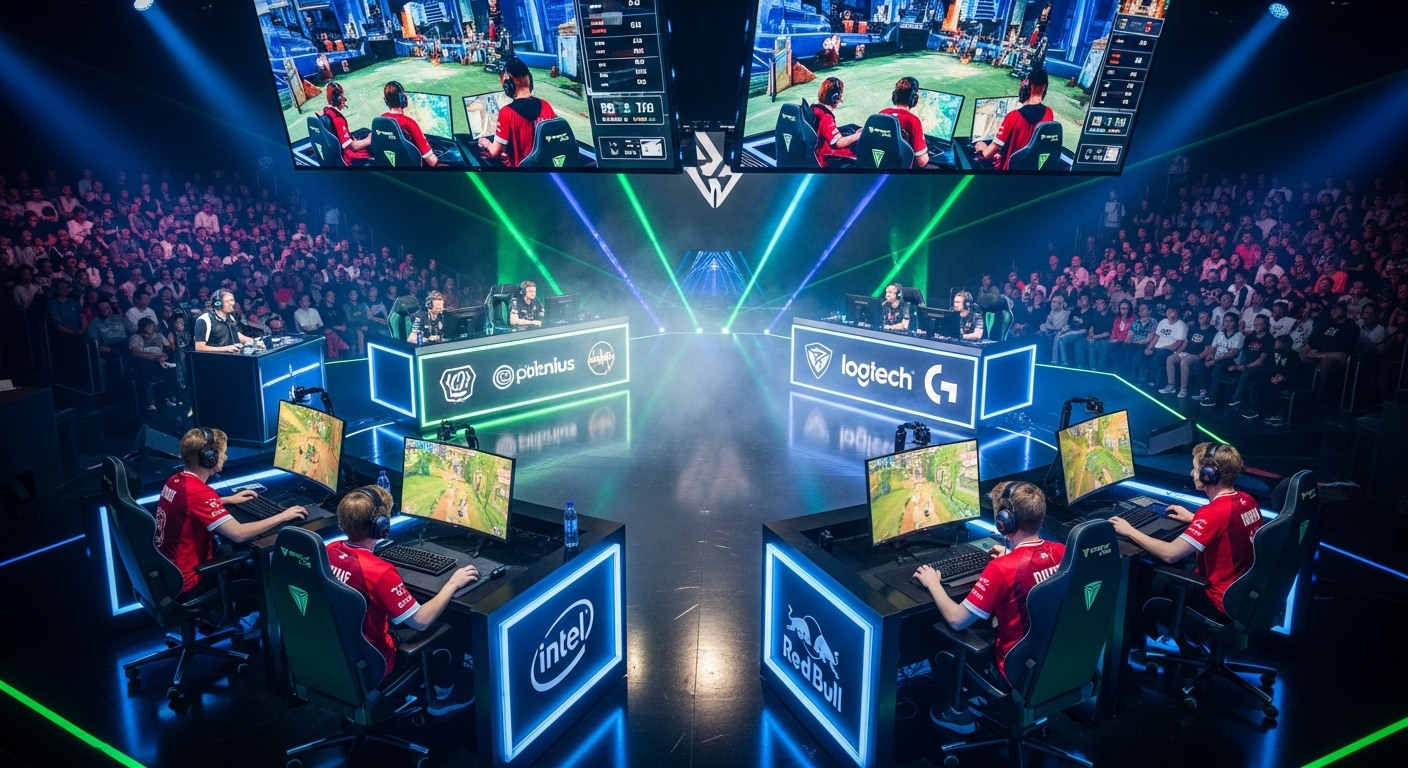
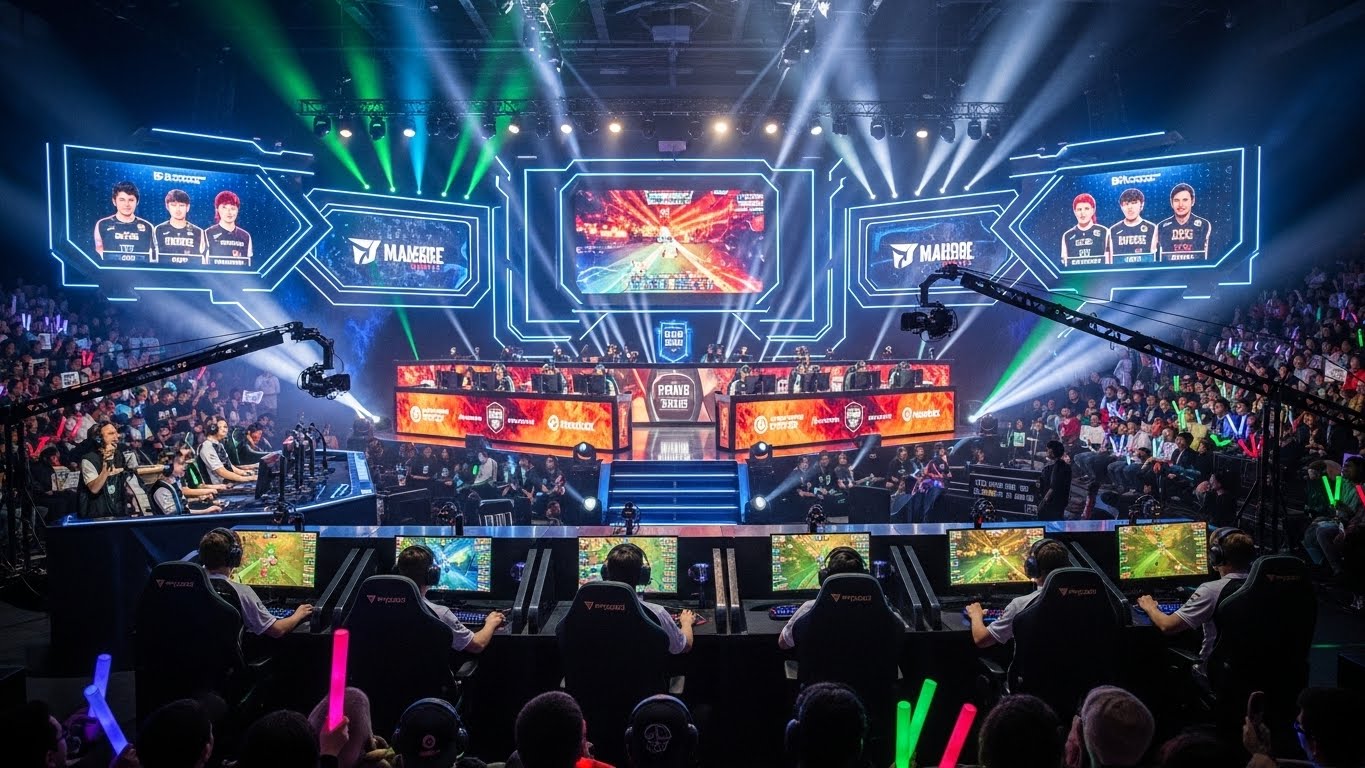
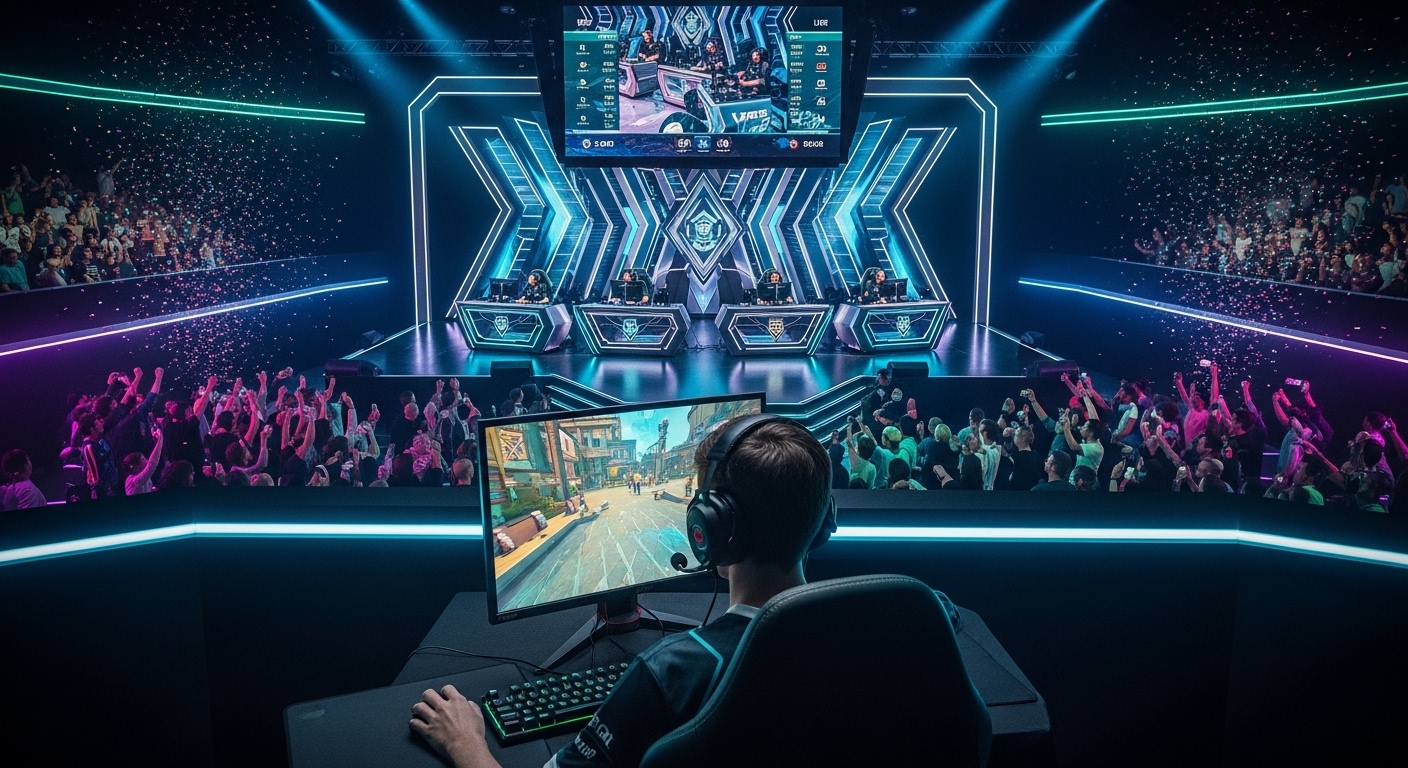
Moreover, esports events themselves have become spectacles. Arenas like the Staples Center in Los Angeles or the Bird’s Nest in Beijing have hosted esports finals with packed audiences, pyrotechnics, and grand stage designs. These events rival, and often surpass, the production value of traditional sports championships.
The Role of Technology in Esports Growth
Technology is the backbone of esports. Advances in hardware, internet infrastructure, and streaming technology have all contributed to its meteoric rise. High-performance gaming PCs, ultra-fast monitors, and low-latency networks ensure that both players and viewers experience the highest quality possible.
Virtual reality (VR) and augmented reality (AR) are also beginning to influence esports. While still developing, these technologies promise to create new types of competitive games and immersive viewing experiences. Artificial intelligence (AI) is being used for training and analysis, helping players identify weaknesses and optimize performance.
Streaming platforms deserve special recognition. Without live streaming, esports might have remained a niche community. The ability to broadcast competitions worldwide, for free, in real-time, turned esports into a global entertainment industry. The accessibility of streaming means anyone with an internet connection can become a spectator, commentator, or even a participant.
Esports and Education: The Classroom Meets the Arena
The educational world has also recognized the potential of esports. Schools and universities are integrating gaming programs to teach teamwork, communication, and problem-solving. Esports scholarships have become a reality in many countries, encouraging students to pursue both academic and gaming excellence.
Beyond competition, esports introduces students to valuable career paths — from game design and broadcasting to event management and marketing. As the industry grows, the demand for professionals who understand both gaming culture and business dynamics increases. Educational institutions are adapting to this shift by creating specialized degrees and certifications in esports management, production, and development.
Additionally, esports can foster inclusivity. Students who might not participate in traditional sports due to physical limitations or social anxieties can find confidence and camaraderie in gaming communities. Esports thus represents not only competition but also opportunity.
Challenges and Controversies in Esports
Despite its success, esports faces several challenges. One of the most significant is sustainability. Rapid growth has led to inflated investments and unrealistic expectations. Many organizations struggle to turn consistent profits, relying heavily on sponsorships rather than direct consumer revenue.
Player burnout is another concern. The pressure to perform, coupled with long training hours and online scrutiny, can take a toll on mental health. Some players retire early due to stress or lack of work-life balance. This has led to growing discussions about player welfare and unionization within the esports industry.
Cheating and match-fixing have also tarnished esports’ reputation at times. As with any competitive field, the temptation to gain unfair advantages exists. Developers and organizers continuously improve anti-cheat software and enforce strict penalties, but maintaining integrity remains an ongoing battle.
Toxicity and inclusivity are additional issues. Online gaming communities can sometimes harbor harassment or discrimination, particularly against women and marginalized groups. The esports community is gradually addressing these issues, with organizations promoting diversity, fair play, and respectful behavior.
The Global Impact: Esports as a Cultural Force
Esports is not confined by geography or language. It’s a truly global phenomenon that bridges cultures and unites people through shared passion. Events in Seoul, Los Angeles, or Berlin attract fans from every continent. Players from Brazil can compete against rivals from Sweden or China, all on the same virtual battlefield.
Culturally, esports has influenced music, fashion, and media. Popular artists collaborate with gaming companies, and esports-inspired merchandise lines have become mainstream. Streaming personalities and pro gamers are now part of pop culture, appearing in commercials, documentaries, and even traditional sports broadcasts.
Economically, esports has created new industries. Event management, game analytics, team branding, and streaming technology are all thriving sectors that generate jobs and innovation. Governments in several countries are recognizing esports as legitimate sports, offering funding and regulatory frameworks to support their growth.
The Future of Esports: What Lies Ahead
Looking forward, the future of esports appears limitless. As technology continues to evolve, so will the ways people play, watch, and interact. Cloud gaming promises to make high-performance gaming accessible to anyone with a decent internet connection, eliminating the need for expensive hardware. Mobile esports, particularly in regions like Asia, are expanding rapidly, making competitive gaming even more inclusive.
Franchise-based leagues, similar to traditional sports, are also becoming more common. Games like Overwatch and Call of Duty have introduced city-based teams, helping localize fan bases and create stable league structures. This model may pave the way for long-term financial sustainability.
Virtual and augmented reality may redefine what esports means altogether, offering new dimensions of gameplay and spectating. Artificial intelligence will continue to assist with training and analytics, making competition more sophisticated.
Esports also has the potential to influence social change. It can bring awareness to issues such as digital equity, inclusion, and global connectivity. As the digital generation continues to mature, esports will remain at the forefront of cultural and technological evolution.
Conclusion: More Than Just Games
Esports is more than a trend — it’s a testament to how human creativity, technology, and competition can merge to create something entirely new. What began as casual gaming sessions among friends has evolved into an ecosystem that encompasses entertainment, education, culture, and economics.
The rise of esports represents a shift in how society defines achievement and community. It has proven that athleticism is not limited to physical strength but includes strategic intelligence, coordination, and mental endurance. It has built bridges across cultures and generations, turning digital spaces into global arenas.
As we look toward the future, esports stands as one of the defining movements of the 21st century — an industry that continues to grow, innovate, and inspire millions around the world. It is not just about winning or losing; it is about passion, persistence, and the power of play.