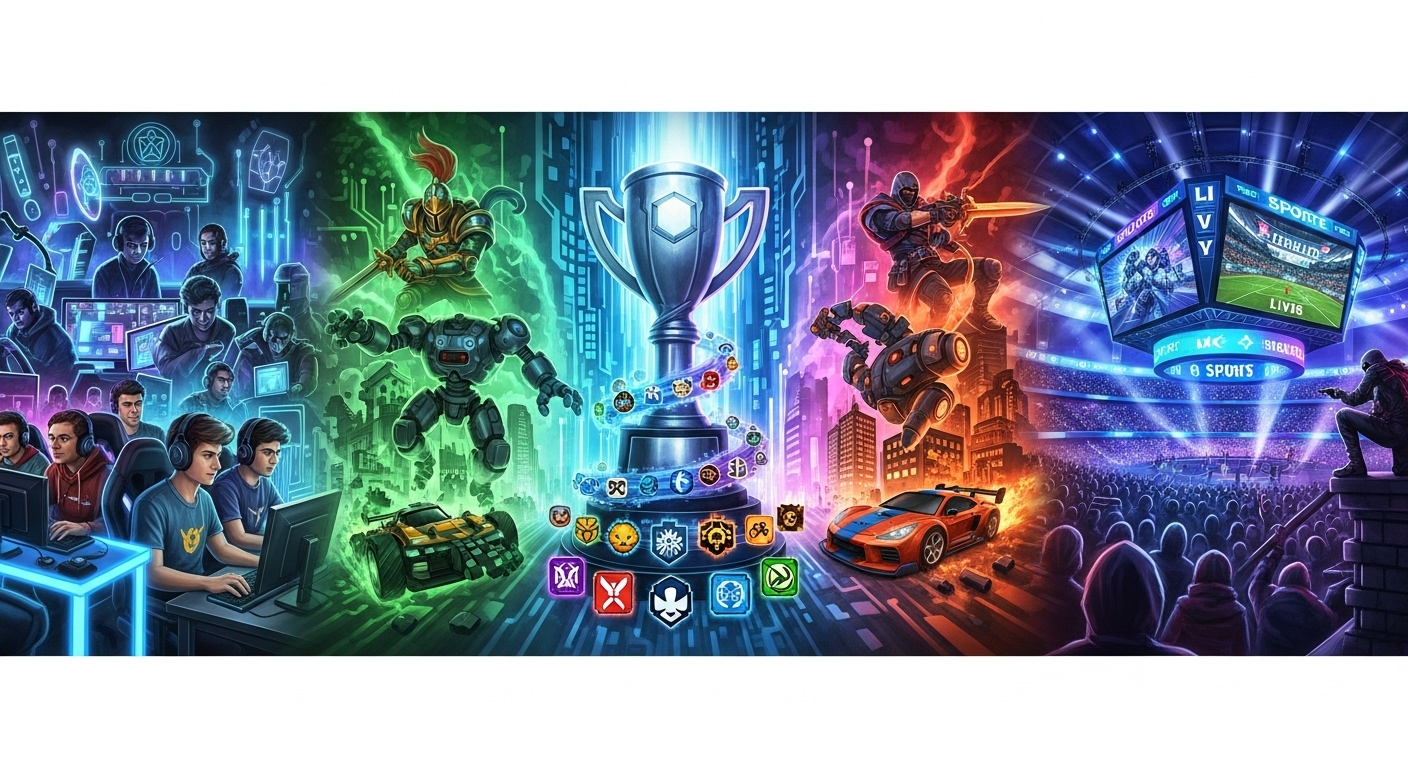
Introduction: The New Era of Competitive Gaming
Esports, or electronic sports, has emerged as one of the most revolutionary entertainment phenomena of the 21st century. What started as casual gaming among friends has transformed into a global industry that attracts millions of viewers, professional players, and corporate sponsorships. Competitive gaming is no longer confined to bedrooms and arcades; it has become a serious pursuit, complete with organized tournaments, international leagues, and substantial prize pools.
Esports represents a convergence of technology, culture, and competition. It has created opportunities for professional careers, new forms of entertainment, and global communities that transcend borders. The digital arena is now a stage where skill, strategy, and teamwork are celebrated on the same scale as traditional sports.
The Origins of Esports: From Arcades to Competitive Play
The origins of esports can be traced back to the early 1970s and 1980s when arcade games like Pong and Space Invaders gained popularity. These games laid the groundwork for competitive gaming, with players vying for high scores and recognition in local communities. One of the first documented esports competitions took place in 1972 at Stanford University, featuring the game Spacewar, where participants competed for prizes.
During the 1990s, home computers and gaming consoles revolutionized gaming. Titles such as Street Fighter II, Doom, and StarCraft introduced multiplayer modes and strategic gameplay, fostering a competitive spirit among players. The internet further expanded esports by enabling players from different countries to compete in real-time, creating the foundation for the global tournaments we see today.
By the early 2000s, esports had evolved into a structured industry. Professional teams, sponsors, and tournaments began to emerge, signaling the transition from casual play to organized competitive gaming.
The Explosion of Esports: Global Recognition
The 2010s marked the era of explosive growth for esports. Popular titles such as League of Legends, Dota 2, Counter-Strike: Global Offensive, and Overwatch captured the attention of players and viewers worldwide. Major tournaments began offering prize pools worth millions of dollars, attracting the best players and generating widespread media coverage.
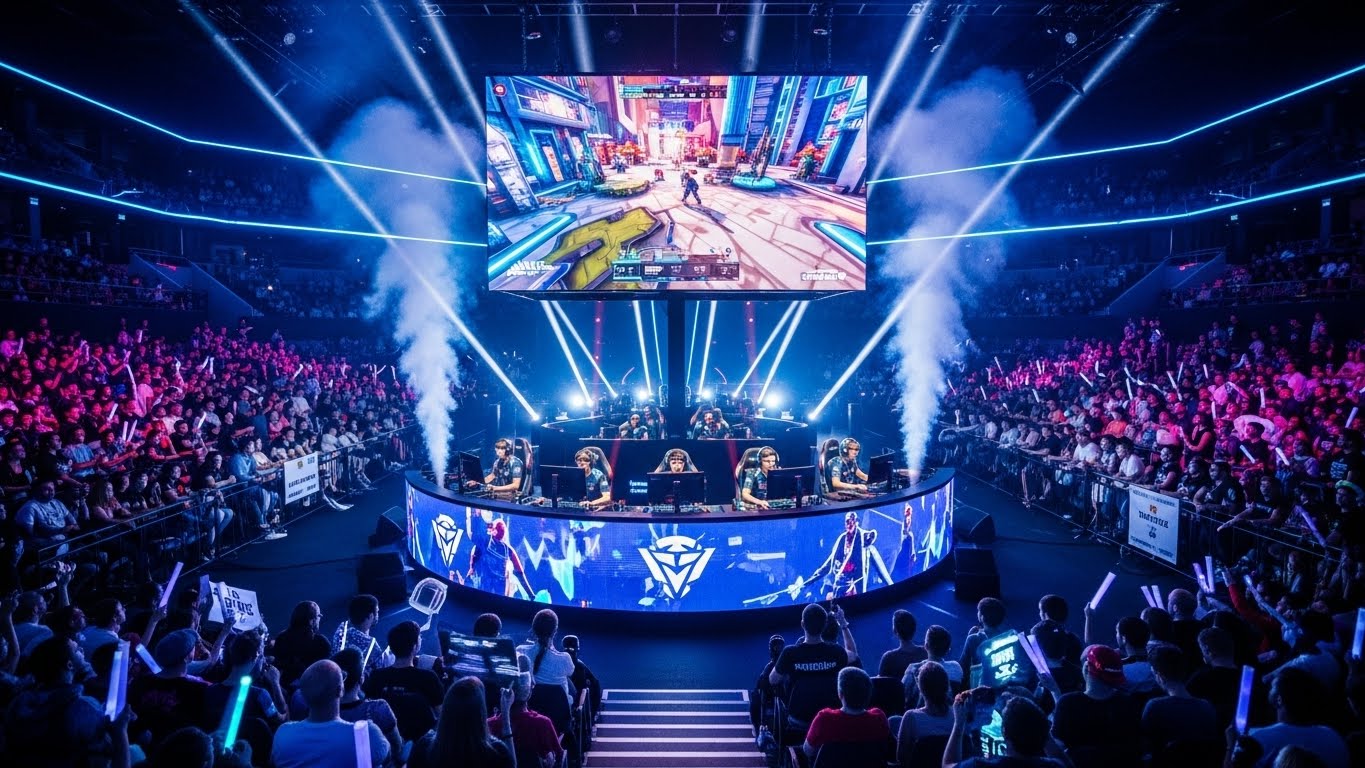
Events like The International for Dota 2 and the League of Legends World Championship became spectacles that rivaled traditional sports in both scale and viewership. Millions tuned in online to watch live streams, while stadiums filled with fans eager to witness top-level gameplay. Streaming platforms played a pivotal role in this growth, offering audiences a way to engage directly with the competition and the players themselves.
Esports had evolved beyond a niche hobby into a global industry that combines entertainment, technology, and professional competition in unprecedented ways.
The Players: Digital Athletes of the Modern Age
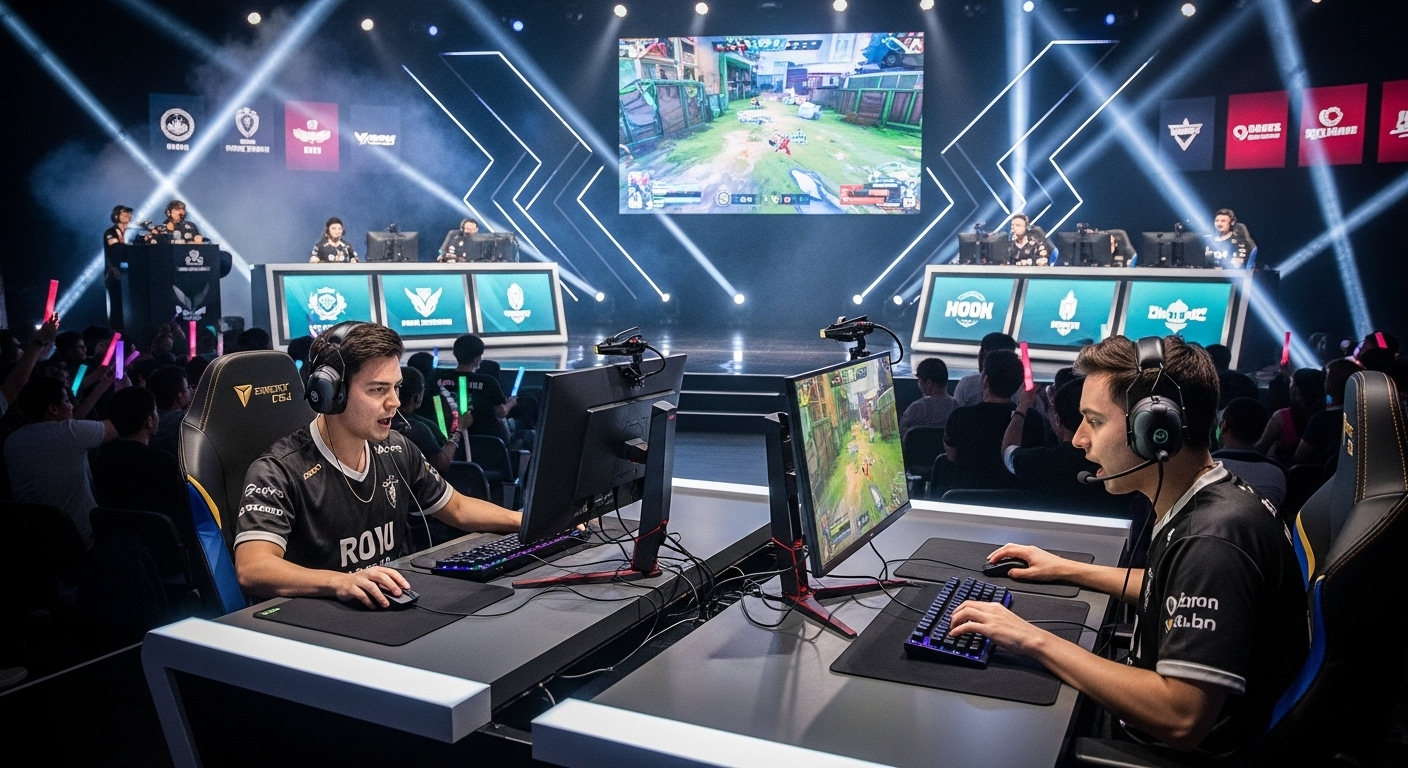
Professional esports players are highly skilled athletes who dedicate hours each day to perfecting their craft. Contrary to the outdated stereotype of casual gamers, these individuals exhibit discipline, strategic thinking, and remarkable reflexes. Success in esports requires a deep understanding of game mechanics, opponent behavior, and team dynamics.
Training for professional esports is intense. Players often practice for eight to twelve hours daily, focusing on reaction speed, decision-making, and tactical coordination. Mental resilience is equally important, as the pressure of competition can lead to stress, fatigue, and burnout. Many professional organizations now employ support staff, including psychologists, physical trainers, and nutritionists, to ensure players maintain both physical and mental health.
Even though esports does not demand traditional athletic movements, physical challenges such as wrist strain, eye fatigue, and long hours of sitting make fitness and health a critical aspect of player performance.
The Business of Esports: A Billion-Dollar Industry
Esports has evolved into a lucrative business ecosystem with revenue streams that rival traditional sports. These include sponsorships, merchandise sales, media rights, in-game purchases, and event tickets. Global brands recognize the value of esports in reaching younger audiences, particularly those who consume entertainment primarily online.
Corporate sponsorship has become a cornerstone of esports, with companies investing in teams, tournaments, and content creation. Traditional sports organizations, including football and basketball franchises, are also entering the esports arena, forming partnerships and launching competitive teams. Universities worldwide offer scholarships to esports players, highlighting the legitimacy of gaming as a professional and academic pursuit.
The economic potential of esports continues to grow, with new opportunities emerging in broadcasting, marketing, game development, and event management. It has become a multi-dimensional industry that combines passion, technology, and commerce.
Technology as the Backbone of Esports
The rapid rise of esports is inseparable from technological advancement. High-speed internet, advanced gaming hardware, and live-streaming platforms have all played vital roles in expanding the reach of competitive gaming. Sophisticated graphics and realistic game environments enhance both player experience and viewer engagement.
Emerging technologies such as virtual reality and augmented reality are pushing the boundaries of esports further. VR tournaments allow players to immerse themselves physically in the game, creating a new level of interaction and excitement. Artificial intelligence is increasingly being used to analyze player performance, develop predictive strategies, and provide enhanced data-driven insights for viewers.
Technology is not just a tool for esports; it is the driving force behind its innovation and global expansion.
Global Communities: Uniting Players Across Borders
One of esports’ most remarkable aspects is its ability to connect people worldwide. Unlike traditional sports, competitive gaming is not limited by geography. Players from different countries, cultures, and backgrounds can compete on equal terms, creating a truly international platform.
Countries such as South Korea, China, and the United States are recognized as esports powerhouses, producing elite players and hosting major tournaments. Meanwhile, emerging regions like Southeast Asia, Latin America, and Africa are increasingly contributing to global esports culture. Online communities thrive, fostering friendships, collaboration, and cultural exchange among players and fans alike.
Esports has become a bridge between nations, proving that shared passion and skill can unite people in ways few other activities can.
Career Paths Beyond Playing
Esports is not limited to professional competition. The industry offers a wide range of career opportunities, including event management, content creation, broadcasting, marketing, coaching, and game development. Educational institutions are recognizing the potential of esports as a field of study, offering specialized courses in esports management, digital media, and interactive entertainment.
Beyond employment, esports teaches valuable life skills such as teamwork, leadership, problem-solving, and strategic thinking. Young players can transform their passion into a career, gaining experience and knowledge that extend beyond the virtual battlefield.
Challenges Facing Esports
Despite its rapid growth, esports faces several challenges. Player burnout, mental health struggles, cheating, and performance-enhancing software remain ongoing concerns. The pressure to perform at a professional level can lead to stress, anxiety, and early career burnout, making mental health support essential.
Another challenge is representation and inclusivity. Although more women and underrepresented groups are entering esports, there are still barriers to equal recognition and opportunities. Creating safe, inclusive, and accessible environments is critical for the continued growth and sustainability of the industry.
Finally, while esports is gaining acceptance, some still question its legitimacy as a “sport.” However, the professionalization of leagues, structured tournaments, and global audience engagement have solidified esports’ place as a serious form of competition.
Cultural Influence of Esports
Esports is more than a form of competition; it is a cultural movement. It shapes online communities, entertainment trends, and youth culture. Top players have become influencers, guiding fashion, music, and gaming trends around the world. Fans engage with players beyond the game, forming connections through live streams, social media, and online content.
Streaming platforms have transformed spectatorship, allowing audiences to interact with players in real time, creating a sense of community rarely seen in traditional sports. Esports represents the voice of a digital generation, combining skill, creativity, and technology in ways that resonate culturally and socially.
The Future of Esports
The future of esports is bright, with technological innovation and global interest driving its continued expansion. Virtual reality, augmented reality, and AI are set to redefine both gameplay and spectator experiences. Esports will continue to blur the lines between traditional sports, digital entertainment, and cultural expression.
Inclusion in international multi-sport events and recognition from educational institutions signal esports’ lasting impact. As the industry evolves, it is likely to become an even more significant part of global entertainment, shaping the way people compete, watch, and interact with games.
Esports is no longer just a pastime; it is a cultural and professional force that will continue to grow and influence generations to come.
Conclusion: Esports as a Modern Phenomenon
From early arcade competitions to massive international tournaments, esports has undergone a remarkable transformation. It has redefined what it means to compete, connect, and entertain in the digital age. Professional players, global communities, and technological innovation all contribute to an industry that continues to expand at an unprecedented pace.
Esports is more than a trend. It is a testament to human creativity, skill, and the power of digital connection. The arena may be virtual, but the impact is very real. In the 21st century, esports is shaping the future of competition, entertainment, and culture, proving that the digital world can inspire, unite, and redefine the way we play.